
A restaurant-chain packaging program is a system, not a list of isolated items. The useful sourcing unit connects each menu application to a controlled container, lid, artwork, case pack and approval record that can be repeated across locations.
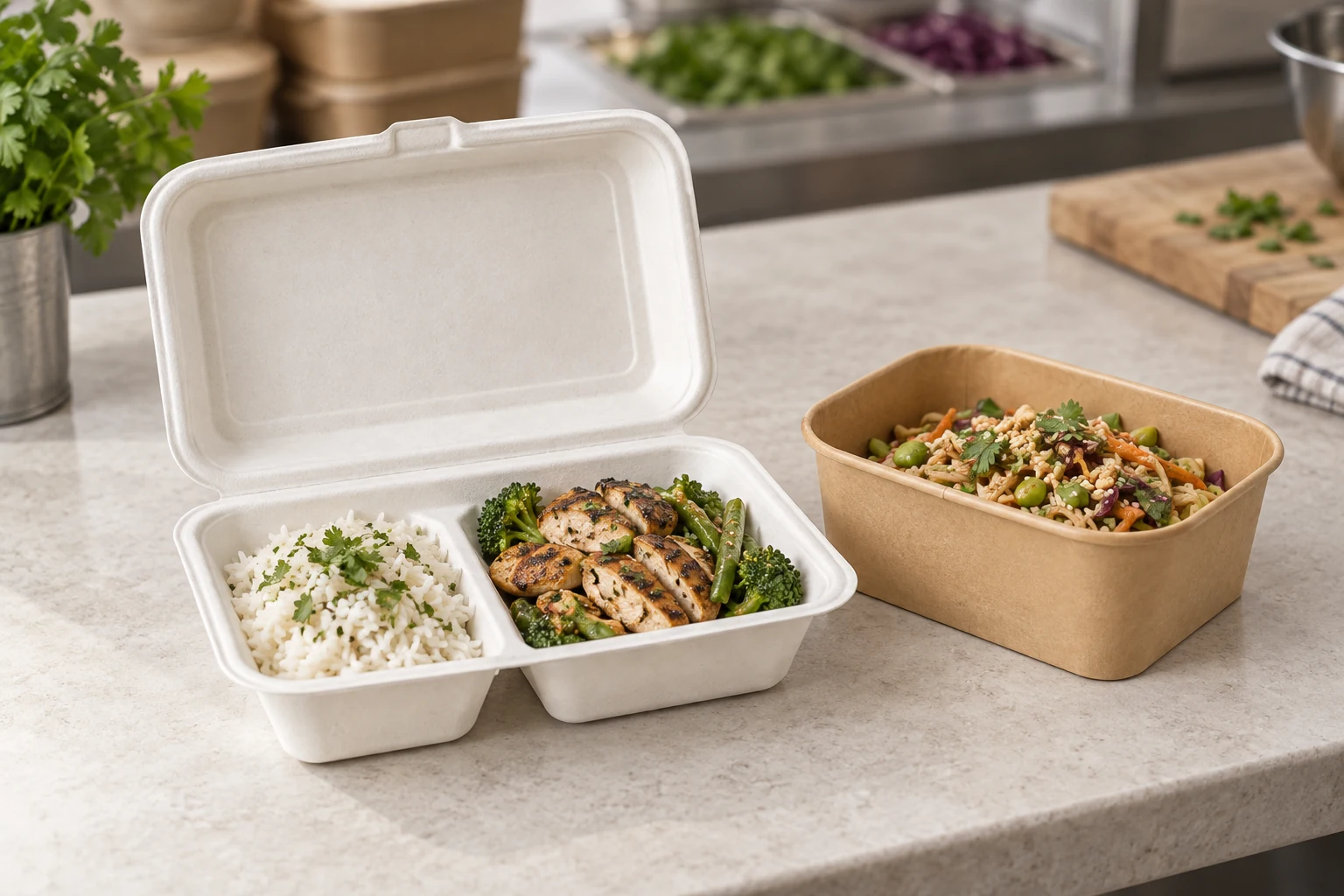
Build a menu-to-format matrix.
List the menu item, portion, fill condition, hold interval, transport method and service location for every required format. Group genuinely similar applications, but keep different risk conditions visible.
Assign a selected model only after usable fit and intended use are reviewed. Record the reason for the selection so later substitutions can be assessed on the same basis.
- Menu item
- Portion and headspace
- Filling and holding
- Base and lid reference
- Service location
Reduce avoidable component complexity.
Where operationally suitable, compare whether multiple bases can use a verified common lid or whether one format can serve several menu items. Compatibility must still be confirmed for the exact models.
Record pack and case quantities for bases, lids and accessories together. Mismatched order units can create excess inventory even when individual piece prices look attractive.
Control brand and market versions.
Identify each artwork, language, barcode and regulatory-text version. Separate permanent brand elements from local or campaign content that may change more frequently.
Use an approved artwork register tied to the product model and revision. This makes it clearer which version belongs in each distribution market or location group.
Test the real operating routine.
Run samples through portioning, closing, stacking, bagging, delivery and end-user opening using the restaurant's actual process. Record the result by model and menu application.
A desktop review cannot answer every operational question. Define the acceptance checks before testing so feedback is comparable across locations and teams.
Plan a container sample review
Plan ordering and rollout by SKU.
Forecast each model and artwork version separately, then compare MOQ, case rounding, storage and rollout sequence. Keep annual estimates separate from committed order quantities.
Request milestone timing for samples, artwork approval, production and shipment readiness. A phased rollout may require different order and stock decisions from a single launch.
Review MOQ planning · Plan packing and lead time
Maintain one written specification record.
Keep the model, material, dimensions, matching components, artwork version, pack, case data, documents and approval status in one controlled record. Identify any field that remains provisional.
Before substitutions or repeat orders, reconfirm the fields that affect fit, intended use and commercial terms. Do not treat visual similarity as equivalence.
Use the RFQ checklist · Verify the supplier scope
Questions before quotation
How should a restaurant chain reduce packaging SKUs?
Map menu and service requirements first, then compare whether verified formats or matched components can cover more than one application without compromising the required fit.
Should an annual forecast be used as the order quantity?
No. Share forecasts for planning, but label committed quantities by model and artwork version so MOQ, packing and timing can be quoted clearly.
How should a packaging change be approved?
Tie the change to the exact model, specification, artwork version, operational sample result, applicable documents and an authorized written approval.
Continue your buying brief
Custom takeaway containers · Takeaway container sourcing guide · Food packaging RFQ checklist