
Custom takeaway packaging starts with a proven food and service fit. Select the base format first, then define the artwork, colour, packing and approval route as a controlled project rather than treating a logo as the entire specification.
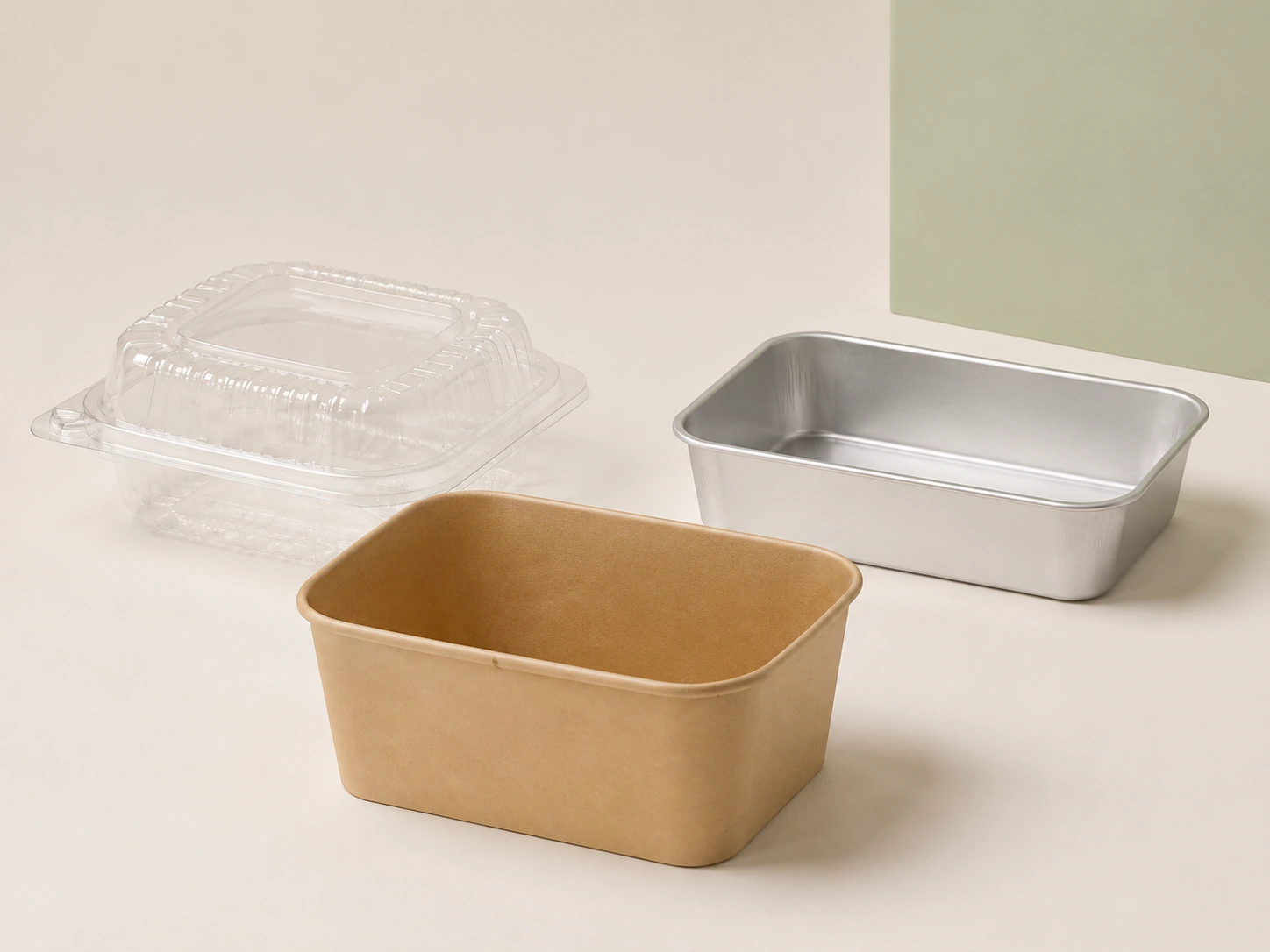
Start with the food and service conditions.
Describe the menu item, portion geometry, filling condition, expected holding interval and transport orientation. Add any reheating, chilling, display or tamper-evidence requirement that should be reviewed.
Suitability depends on the exact material and model. The project brief should ask for the intended use to be confirmed instead of relying on a generic material description.
- Food and portion
- Filling and holding conditions
- Transport and stacking
- Reheating or chilling review
- Destination market
Lock the base container before artwork.
Record the selected family, model, usable dimensions or capacity, material, compartment layout and closure. A separate lid should be listed with the base as a matched system.
Final artwork should use the print area or dieline for that exact construction. A photograph of a similar container is not a substitute for the model record.
Define what custom means for this project.
List product colour, print sides, colour count, coverage, label, sleeve, embossing, wrapper, inner-pack presentation and carton marks separately. Mark which elements are required and which are optional for quotation.
Ask which decoration routes can be reviewed for the selected construction. Availability, print method and setup conditions are project-specific and must be confirmed in writing.
Plan samples around approval decisions.
A catalogue sample can help assess shape and portion fit; a custom prototype can help review layout; a production-representative sample may answer different questions. State what the sample must prove before requesting it.
Keep the sample reference, artwork version, observations and approval decision together. Sample availability, cost and timing are confirmed after the format and customization scope are defined.
Request a comparable commercial quotation.
State quantity by model, size, colour and artwork version, and clarify whether the unit means pieces, packs or cases. Ask for MOQ, unit price, setup items, packing and validity on the same written specification.
Lead time should identify its starting point and the shipment-ready milestone. Separate sample, artwork-approval and production timing so the critical path is visible.
Understand container MOQ · Plan lead time and packing
Close the brief with evidence and delivery.
Name the destination market and intended food-contact conditions, then request available records for the exact product or material. Check product identity, scope, issuer and validity rather than accepting a related document by appearance.
Add destination, trade term, case data, carton marks and consolidation needs. Final specification, documents, commercial terms and timing should be confirmed before order release.
Use the complete RFQ checklist · Review the supplier-verification guide
Questions before quotation
Can every takeaway container be custom printed?
No general assumption should be made. Decoration options depend on the selected material, construction, artwork and project scope and are confirmed for the exact model.
What is the MOQ for custom takeaway containers?
MOQ is quoted for the selected model, material, colour, artwork version, packing and destination. Send those inputs for a written project-specific answer.
Can a sample be made before a bulk order?
A suitable sample route can be reviewed after the base format and approval objective are defined. Availability, cost, timing and what the sample represents must be confirmed.
Continue your buying brief
Takeaway boxes and containers · Custom printing guide · Food packaging RFQ checklist