
A cold-drink cup program should connect the beverage and operating routine to an exact PET or PP cup, compatible lid or sealing route, presentation requirement, size matrix, case pack and written evidence scope.
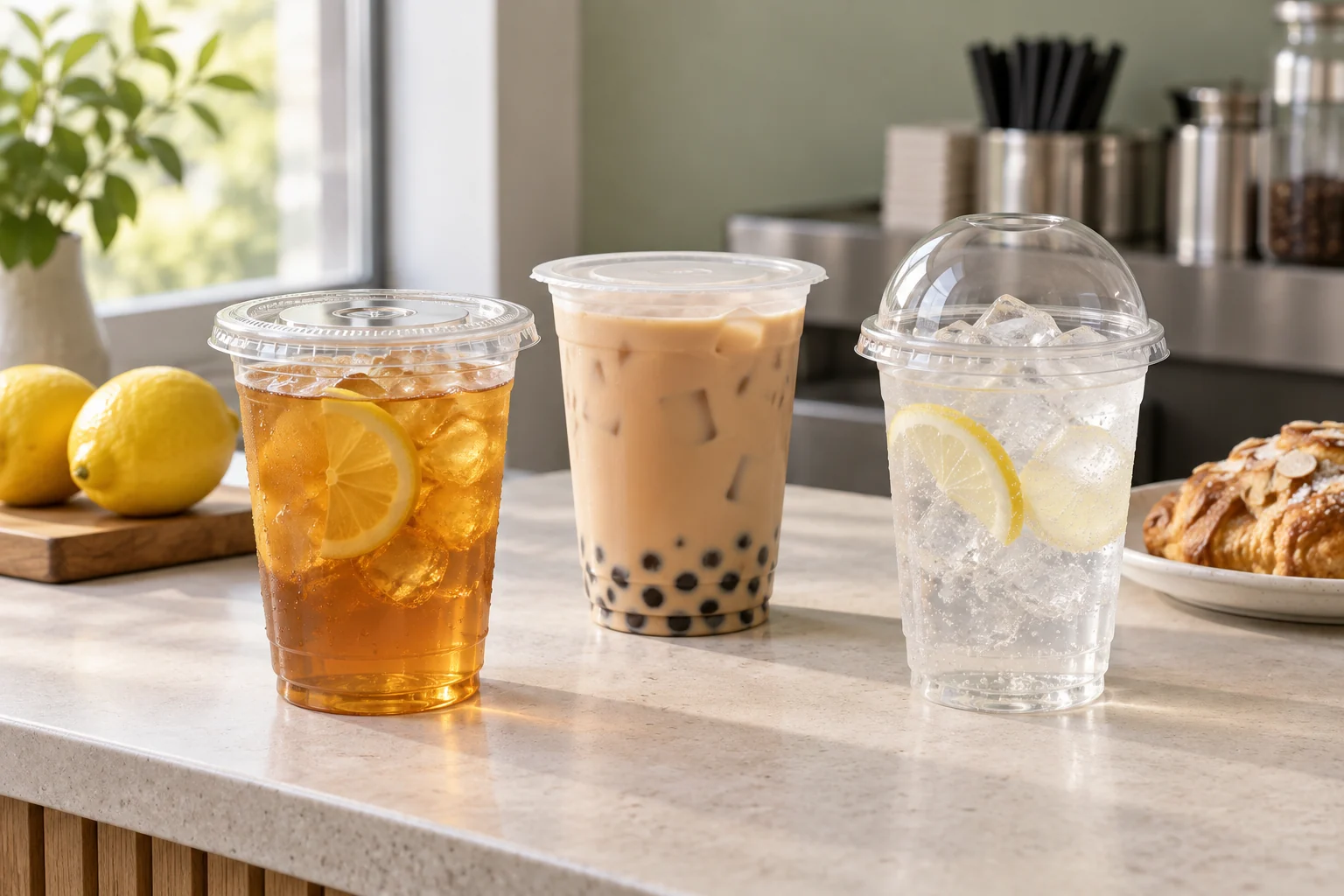
Map the beverage and operating routine.
State the drink, portion, fill condition, ice or inclusions, hold interval, delivery orientation and consumer opening. Add any sealing, dome-lid, straw or tamper-evidence requirement that needs review.
Use the real beverage and service journey to shortlist models. A general PET or PP label should not be treated as a complete intended-use specification.
- Beverage and inclusions
- Fill and hold conditions
- Cup capacity
- Delivery orientation
- Opening and accessory needs
Compare PET and PP cup families
Choose PET or PP in the context of the model.
The current catalogue separates clear PET cold-cup entries, a broad PP disposable-cup range and tall 500 ml and 700 ml PP milk-tea formats. Compare the exact dimensions, weight where listed, visual requirement and specification status.
Do not make environmental, temperature or performance claims from the resin name alone. Request model-specific suitability and available evidence for the destination.
Review PET cold cups · Review PP disposable cups · Review PP milk-tea cups
Build the cup, lid and sealing matrix.
Record every cup model with its proposed lid or sealing component, dimensions, opening style and pack quantity. Identify confirmed shared-lid relationships and keep alternatives separate.
Test closure, stacking, carrying, drinking and any film-seal or delivery routine with the exact filled system.
Define presentation and branding requirements.
State whether drink visibility, cup clarity, product colour, label space or direct decoration is part of the selling experience. Map logos and information against grip areas, curves, lids and stacking.
Ask which decoration or label route can be reviewed for the exact construction. Keep artwork versions and approval responsibilities controlled.
Prepare the print and artwork brief
Plan the size mix and commercial order.
Break forecasts and committed quantities down by cup, lid, size, colour and artwork. Request MOQ, price and packing for each real order line and convert components into complete usable sets.
For multi-site or seasonal programs, keep rollout quantities separate from the annual estimate and record case rounding and storage needs.
Verify packing, evidence and shipment readiness.
Request cup and lid case quantities, carton dimensions, gross weights and the approval milestones that lead to shipment readiness. Use confirmed data for loading rather than a generic piece-count assumption.
Name the destination and intended beverage conditions when requesting specifications or food-contact records. Confirm the final models, documents and commercial terms in writing.
Plan cup packing and lead time · Evaluate a plastic cup supplier · Build the complete RFQ
Questions before quotation
Which is better for cold drinks, PET or PP cups?
There is no universal answer. Compare the exact model against beverage, fill, presentation, closure, delivery and destination requirements and review model-specific evidence.
Can milk-tea cups use the same lids as other 90 mm cups?
Do not assume so from the stated diameter. Request exact cup-and-lid compatibility and test the selected components in the intended service routine.
What should a wholesale plastic-cup quotation include?
It should identify cup and lid models, sizes, quantities, material and colour, artwork, packing, MOQ basis, price, sample status, document scope, timing and delivery basis.
Continue your buying brief
PET and PP cups · Paper vs plastic disposable cups · Evaluate a plastic cup manufacturer or supplier