
A credible plastic-cup review connects the contracting company, actual production scope, exact PET or PP models, matching components, supporting records and the commercial order. A factory image or broad material claim cannot establish all of those facts.
Confirm the contracting and payment identity.
Request the legal company name, registered or business address, quotation issuer, payment beneficiary and entity that will issue commercial documents. Resolve any unexplained difference before ordering.
A trading name, domain or salesperson profile is not the complete legal-identity record.
- Legal company name
- Business address
- Quotation issuer
- Payment beneficiary
- Commercial document issuer
Review ANWELLUP's public scope
Clarify manufacturer, partner and service scope.
Ask which cup families and processes are handled directly, which involve production partners and who controls model specifications, samples, quality records and shipment coordination. Request the answer for the actual PET or PP range under review.
Do not assume that one facility, machine or audit covers a mixed catalogue. Connect the facility relationship to the selected product family.
Review manufacturing and equipment context
Verify the exact plastic cup range.
Request the family, AW SKU or supplier model, material, size, dimensions, weight where relevant, colour or clarity, matching lid and pack information. Mark fields that remain under review.
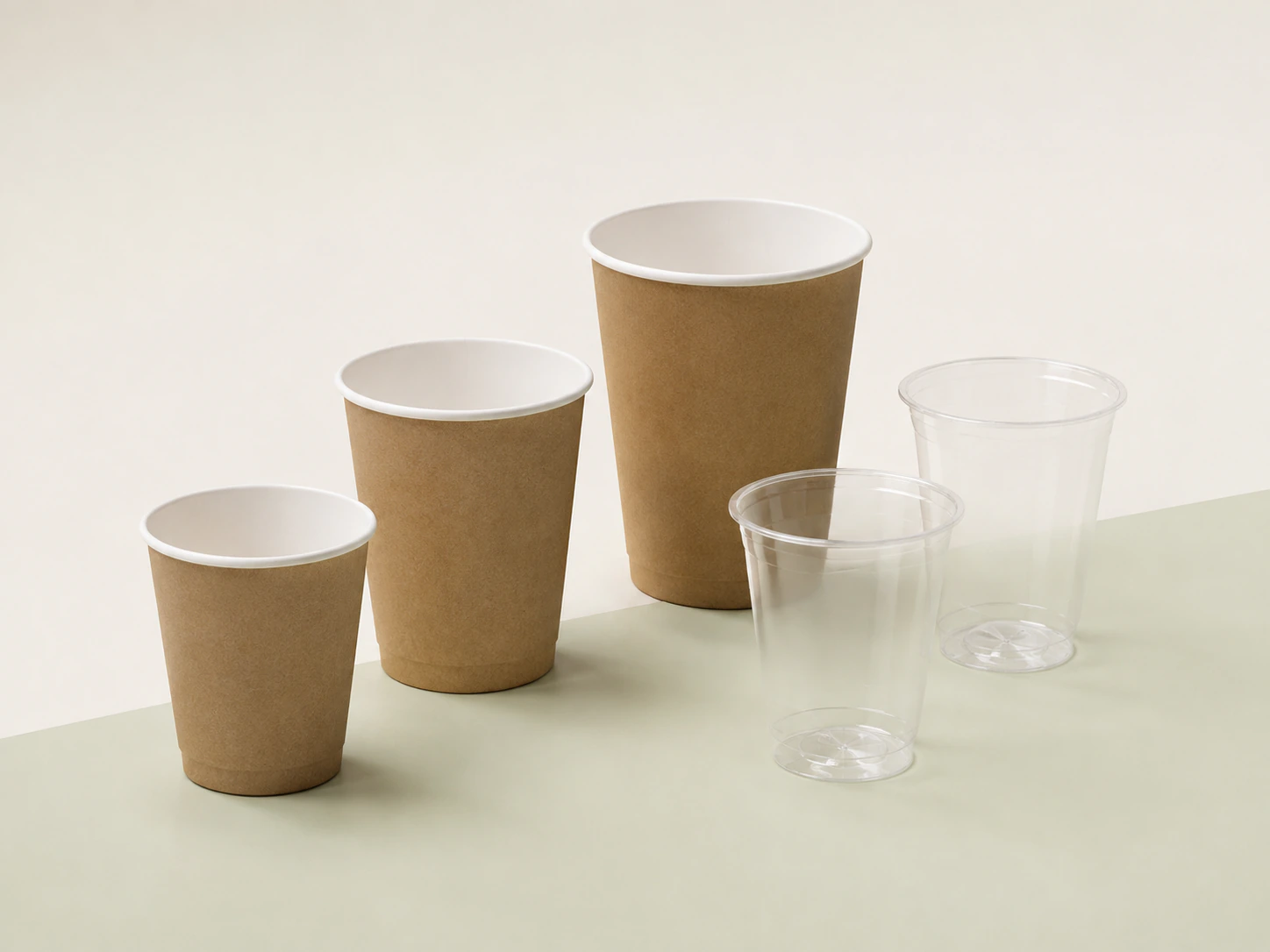
ANWELLUP's current public range separates PET cold cups, general PP disposable cups and PP milk-tea cups so buyers can reference the exact family instead of a generic plastic-cup image.
PET cold cups: Public family with 7–10 oz model entries
PP disposable cups: Public family with portion-to-beverage sizes from 1–20 oz
PP milk-tea cups: Public family with 500 ml and 700 ml model entries
Check component and intended-use evidence.
Verify the proposed cup and lid as one system and state the beverage, fill and service conditions. Request available specifications, declarations or test records that identify the relevant product or material and scope.
Check issuer, test basis, validity and connection to the proposed model. A document for a related material or different cup should not be presented as universal coverage.
Review document handling · Build the lid matrix
Use samples to verify defined questions.
State whether the sample should confirm dimensions, clarity, cup weight, lid fit, filling, handling, delivery or custom artwork. Record what the sample represents and any difference from the proposed production order.
A sample review complements the model record and document check; it does not replace them.
Plan cup samples and approvals
Put the commercial commitment in one record.
Confirm the cup and lid specifications, quantities, MOQ basis, price, packing, sample and artwork status, documents, milestone timing, delivery term and payment identity in writing.
Escalate inconsistent identities, unsupported performance claims, unexplained payment changes or pressure to bypass model-level review.
Use the supplier-verification guide · Build a complete RFQ
Questions before quotation
Does a factory photograph prove who manufactured the cups?
No. Confirm legal identity, facility relationship, product and process scope, specification control and the records tied to the proposed model.
Does one test report cover every PET or PP cup?
Not automatically. Review the named product or material, scope, issuer, test basis and validity and establish how it connects to the exact model.
What should be confirmed before paying a plastic cup supplier?
Confirm the contracting and payment identity, cup-and-lid specification, quantity, price, packing, approvals, document scope, timing and delivery basis in writing.
Continue your buying brief
PET and PP cup range · How to verify a food packaging supplier · Quality and document handling