
A matching ounce label is not a lid specification. Buyers should pair each cup with an exact lid reference, confirm the rim and closure system, and test the filled set through the real service and delivery routine.
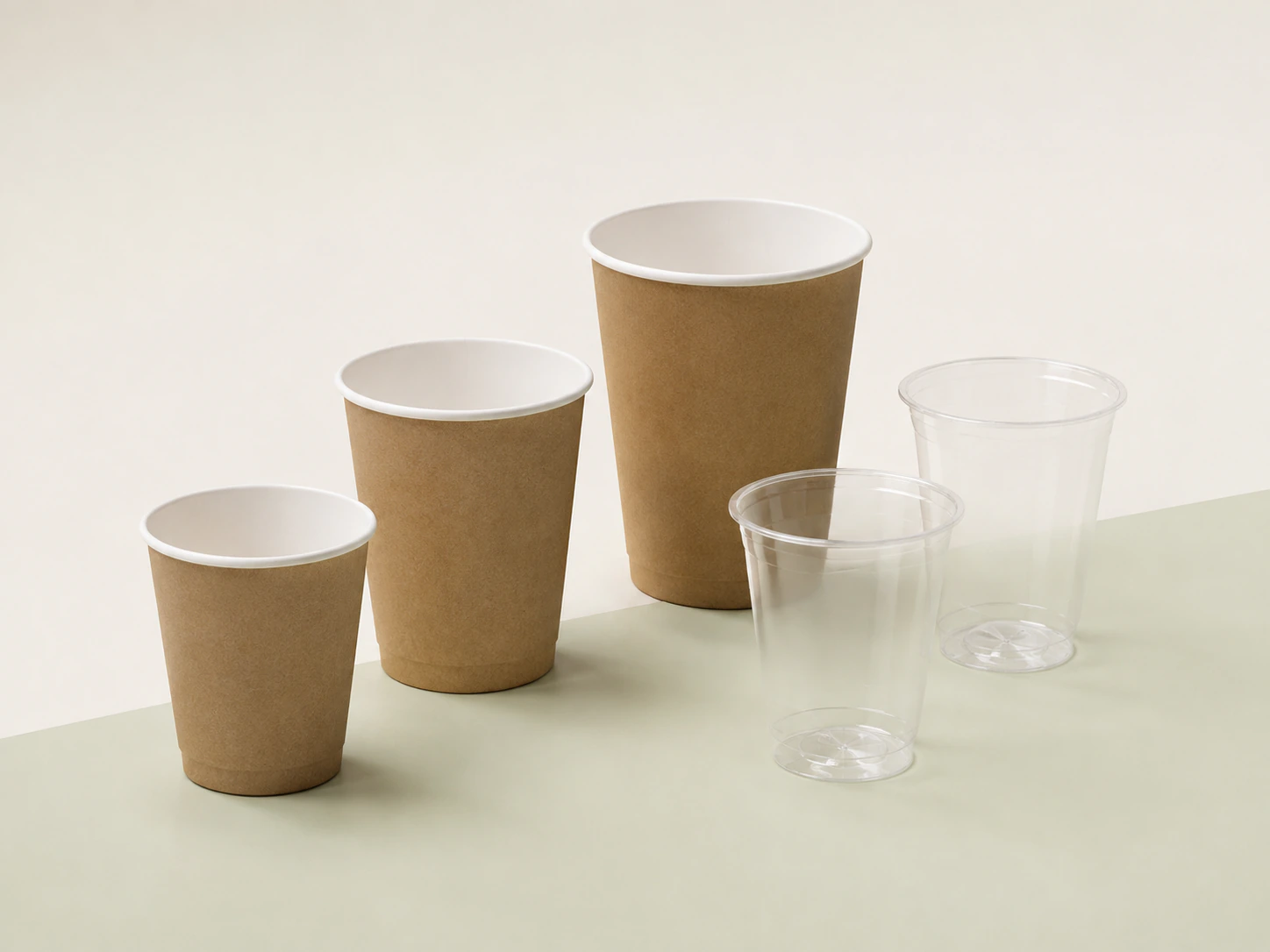
Identify every cup by model, not capacity alone.
Start the matrix with the cup family, AW SKU, nominal capacity, dimensions and material. Two 12 oz cups can use different rim geometry or construction even when their serving volume appears comparable.
Mark any unconfirmed dimension rather than copying a value from a visually similar item. The selected cup page is the starting reference for the written review.
- Cup family and AW SKU
- Nominal capacity
- Top or rim dimension
- Cup construction
- Specification status
Compare the cups and drinkware range
Record the lid as a separate component.
Give the lid its own reference, material, colour or clarity, opening style and pack quantity. If flat, sip, dome or other lid forms are being considered, list them as separate options rather than one generic cover.
Ask the supplier to confirm which exact cup models the lid is intended to fit. A shared nominal diameter is useful screening information but not final compatibility approval.
Build a many-size compatibility matrix.
For a program with several cup sizes, put cup models down the rows and proposed lid models across the columns. Mark only confirmed pairings and keep sample-tested and document-confirmed status visible.
A common-lid strategy can reduce operational complexity, but it should follow verified compatibility rather than drive an unsupported substitution.
Plan a complete disposable cup program
Test the filled system through service.
Use the intended beverage and fill level. Close the lid using the real operator routine, then hold, carry, stack and transport it in the planned orientation before recording opening and drinking behaviour.
Define the test conditions and observations. A dry empty fit check is useful, but it does not represent every filled-service condition.
Plan samples and approval records
Align cup and lid packing quantities.
Record pieces per sleeve, sleeves per case and total pieces per case for both components. Convert the planned order into usable cup-and-lid sets and show any remaining unmatched inventory.
If several cups share one verified lid, calculate the lid quantity from the size mix rather than from the total cup forecast alone.
Review case packs and lead time
Freeze the approved pairing in writing.
The final record should name the cup and lid references, applicable sizes, tested service conditions, sample identity, pack quantities and approval date. Link any later substitution to a new comparison and approval.
Reconfirm availability, MOQ, documents and commercial terms for both components before order release.
Use the full RFQ checklist · Send the selected pairing
Questions before quotation
Will every 90 mm lid fit every 90 mm cup?
Do not assume so. The stated dimension does not describe every part of the rim and closure geometry; verify the exact cup-and-lid models together.
Can one lid be used across several cup sizes?
It may be possible for specific confirmed models. Request a written compatibility matrix and test the actual pairings used in the program.
Should lids be included in MOQ and freight calculations?
Yes. Compare lid and cup order units, case packs, carton data and quantities together so the purchase creates the required number of usable sets.
Continue your buying brief
Disposable cups and drinkware · Disposable cup MOQ guide · Food packaging RFQ checklist