
A custom wrapped meal kit combines a product bill of materials with a packaging and artwork specification. Lock every utensil and insert first, then control the wrapper, proof, assembly sample, case pack and commercial basis.
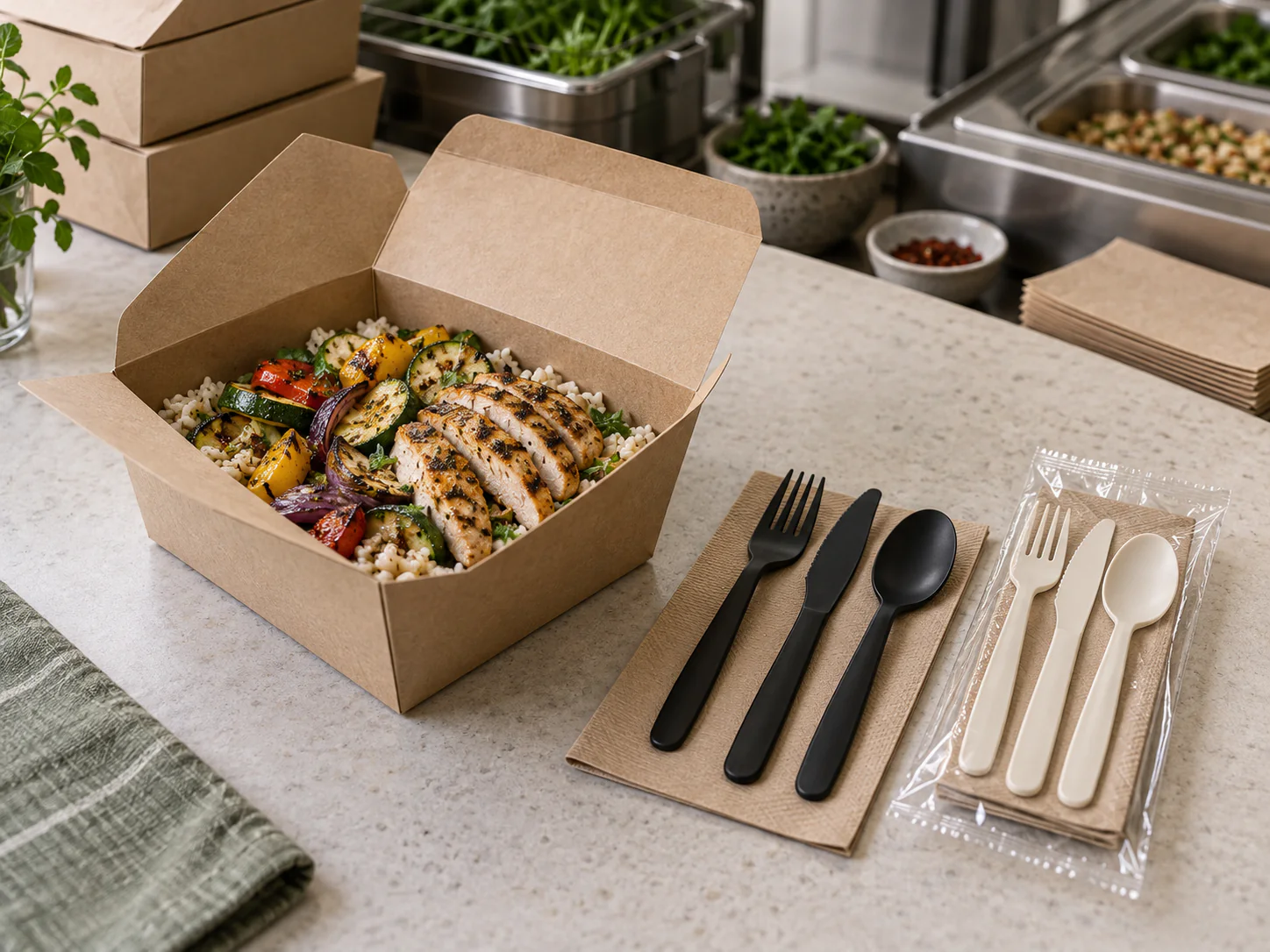
Define the meal and issue routine.
Describe the menu, takeaway or catering journey, where the kit is stored and issued, transport orientation and customer opening. State whether one configuration serves every order or several menu-specific sets are required.
Use the operating routine to define components and tests; do not assume that one generic wrapped set fits every service.
- Menu and service
- Required utensils
- Additional components
- Issue and transport routine
- Destination market
Compare cutlery and meal-kit families
Freeze the component list before wrapper artwork.
List each utensil by model or specification, material, colour and weight requirement. Add napkin, toothpick, wipe, condiment, insert or other accessory as a named component with its source responsibility.
A 4–6 piece label describes a range, not the final bill of materials. Approve one controlled list for each kit version.
Use the bulk disposable-cutlery guide
Specify wrapper and print details.
Define wrapper construction for review, dimensions, colour or transparency, print sides, colour references, coverage, opening and seal presentation. Provide language, barcode and any identification requirements.
Request the correct dieline and name each artwork file and revision. Confirm what the digital proof and physical sample are intended to approve.
Review custom packaging print inputs
Approve assembly and customer use.
Check that the sample contains every approved component in the intended orientation, that artwork and wrapper presentation match the record, and that the kit fits the delivery bag, tray or dispenser.
Run customer opening and representative food-use checks with identified utensil models. Keep deviations and decisions attached to the sample version.
Use the cutlery sample checklist
Quote MOQ and case packing by kit version.
Break quantities down by component list, utensil material or colour and wrapper artwork. Ask whether MOQ applies per wrapper version, assembly configuration or production batch.
Request kits per inner pack and case, carton dimensions, gross weight and carton marks. Compare complete usable kits instead of adding unrelated piece prices.
Plan MOQ, case packs and lead time
Confirm documents, timing and final scope.
Name the destination and intended use, then request available records for the exact utensils, wrapper and relevant components. Confirm what event starts production timing and what shipment-ready means.
Release the order against the component list, artwork, samples, inspection fields, documents, quantities, packing, price and delivery basis in writing.
Review quality and document handling · Send the kit brief
Questions before quotation
What can be included in a custom wrapped meal kit?
Forks, knives, spoons and selected accessories such as napkins, toothpicks, wipes, condiments or inserts can be reviewed. Define every component and source responsibility in the bill of materials.
Can the wrapper carry custom artwork?
Artwork options can be reviewed for the defined wrapper and configuration. Provide colours, coverage, versions, barcode or language needs and confirm proof, sample, MOQ and packing details.
What is the MOQ for custom meal kits?
MOQ is confirmed for the exact component list, utensil models, wrapper, artwork, packing and destination. Ask for the unit and basis in the written quotation.
Continue your buying brief
Disposable cutlery sets bulk guide · Bulk vs individually wrapped cutlery · Food packaging RFQ checklist