
A cutlery sample is useful only when the buyer knows exactly which model, material, configuration and production status it represents. Define the decision first, then record measurable and service-based checks without turning one result into a category-wide claim.
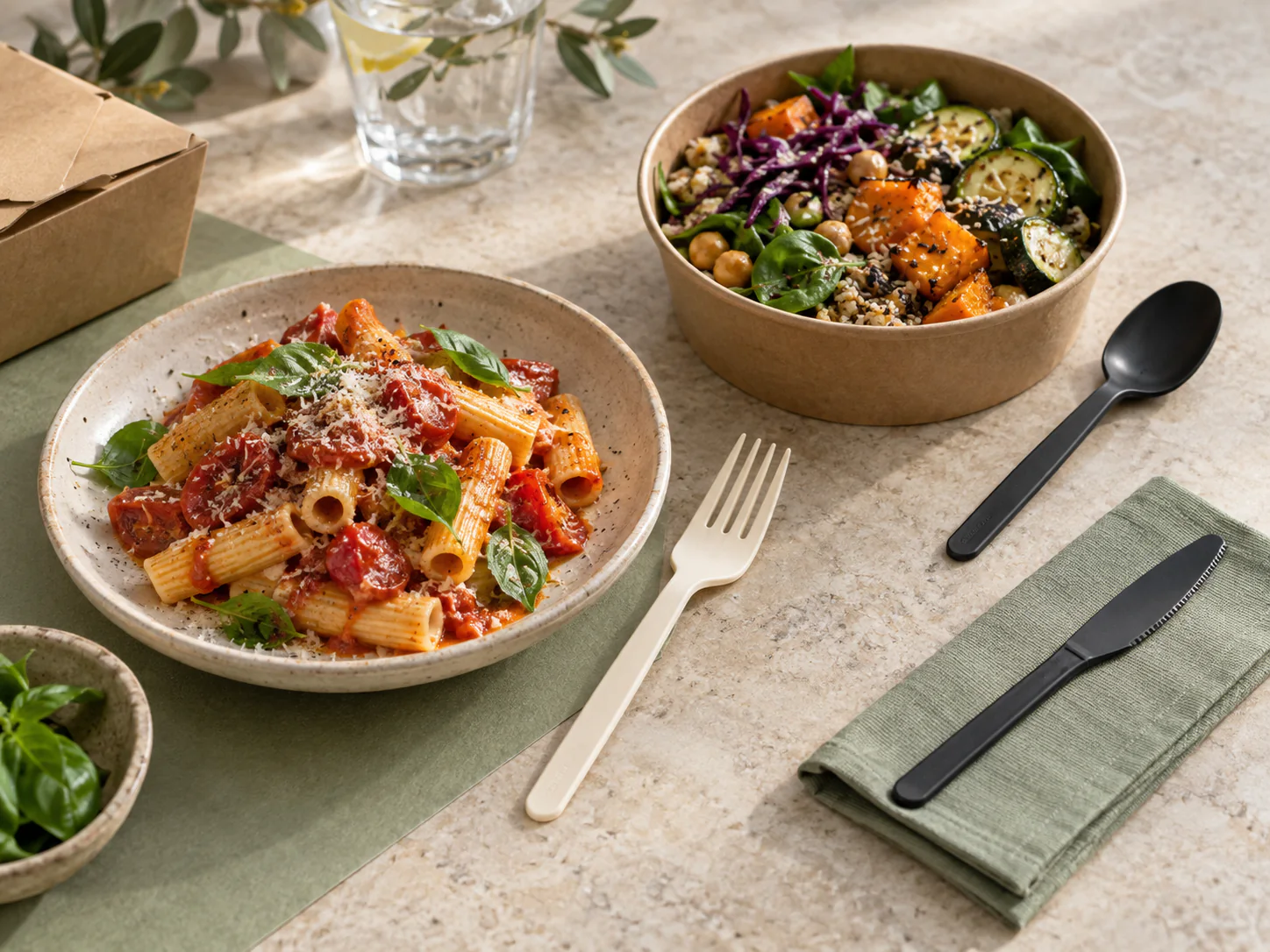
Identify the sample before testing.
Record family, AW SKU, utensil type, material, colour, declared piece weight, dimensions or drawing revision, wrapper and kit bill of materials. Mark whether it is a catalogue, pre-production or production-representative sample.
Photograph and label the received sample and packaging. An unidentified sample cannot control a later order.
- AW SKU and utensil
- Material and colour
- Weight or drawing revision
- Wrapper or kit version
- Sample purpose and date
Compare current cutlery models
Agree measurable checks and tools.
Define which dimensions, piece weights, counts, colours or pack fields will be checked, how they will be measured and what tolerance or reference applies. Use calibrated equipment where the buyer's procedure requires it.
Do not invent a tolerance from a catalogue entry. Confirm specification values and acceptance rules for the selected model before treating them as order criteria.
Current weight evidence: Selected AW-CUT-MW bulk utensils list 2.5 g; final values and tolerances remain subject to model confirmation
Specification status: Both current cutlery families are marked for review, so missing fields remain open RFQ items
Inspect form, finish and visible defects.
Use an agreed sample size and lighting to record shape, edges, surface, colour, contamination, flash, deformation or other visible observations relevant to the specification.
Separate cosmetic observations from functional results and document examples. Avoid vague pass statements that cannot be traced to a criterion.
Review ANWELLUP quality workflow
Run a representative food-use check.
Use the intended menu and service conditions to evaluate grip, cutting, piercing, scooping and handling as applicable. Record the conditions, number of samples and outcome.
This supports the buyer's program decision; it does not create a universal PP, PS or model performance claim outside the test conditions.
Check wrapped pieces and complete kits.
For wrapped products, review seal and presentation, print version, opening and component identity. For kits, count every utensil, napkin, condiment or insert against the approved bill of materials.
Run tray, bag or carton assembly where it affects fit and presentation. Keep missing or incorrect components as a distinct result.
Create an approval and change record.
Record approver, date, sample identity, specification and artwork versions, test notes, deviations and final decision. Retain one controlled reference when the procurement program requires it.
A material, model, component, wrapper or artwork change should trigger the relevant review again before order release.
Build the full RFQ · Discuss a sample plan
Questions before quotation
Can a catalogue sample approve a production order?
Only if its purpose, identity and relationship to the final specification are clear and the buyer accepts that scope. Catalogue, pre-production and production-representative samples can support different decisions.
What should be checked in a meal-kit sample?
Check each component against the bill of materials, utensil identity and finish, wrapper and artwork, component count, tray or bag fit, opening and the agreed food-use routine.
Does a 2.5 g listing define a tolerance?
No. It is a current catalogue field for selected AW-CUT-MW references. The final nominal value, measurement method and tolerance must be confirmed for the model.
Continue your buying brief
Disposable cutlery sets bulk guide · Quality and compliance · How to verify a packaging supplier