
Airline catering cutlery should be sourced as a controlled service program. Connect each menu and service class to an exact utensil bill of materials, wrapper, artwork, tray-fit test, case pack, approval record and tender requirement.
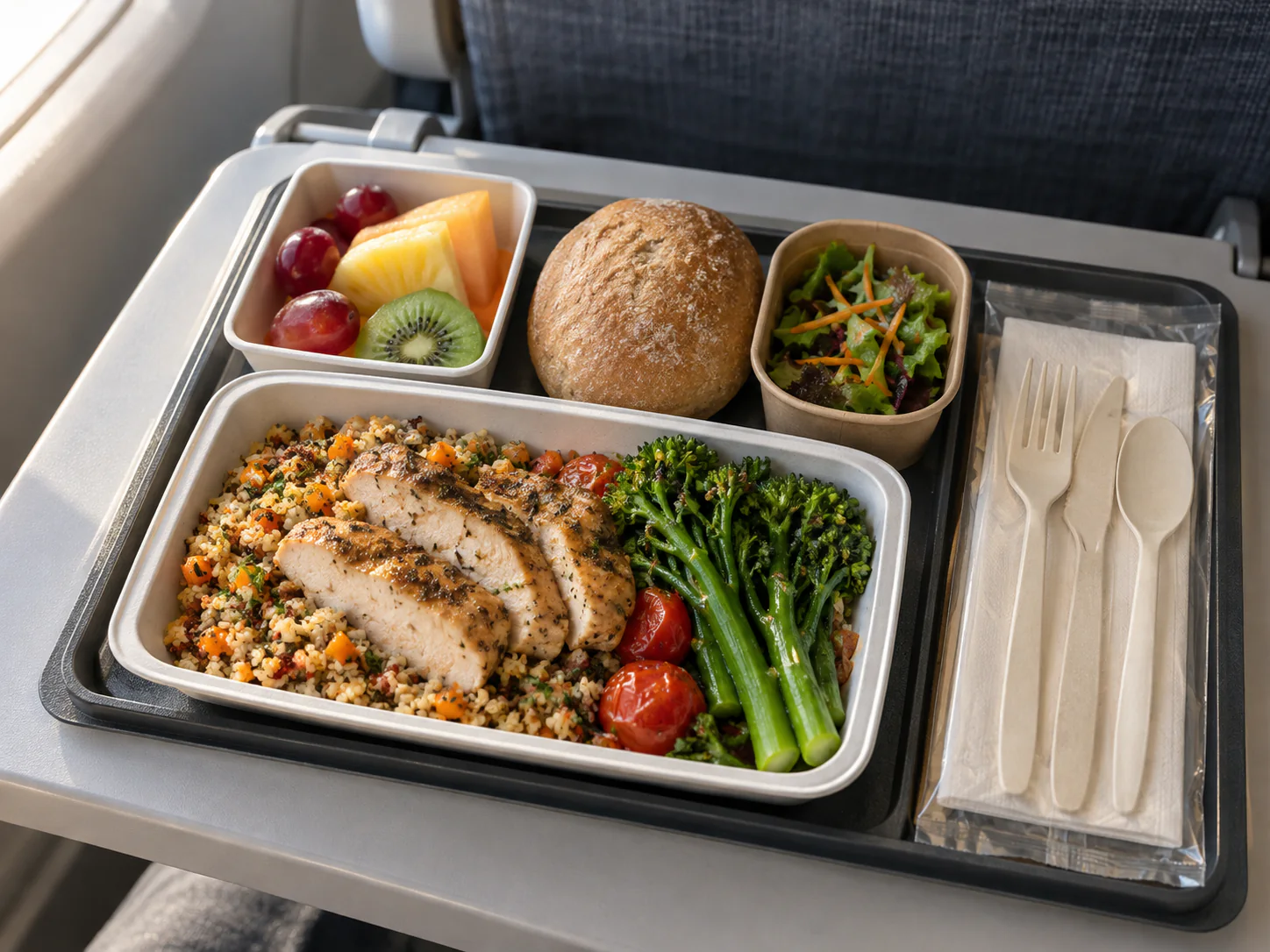
Separate programs by menu and service class.
Describe the menu, tray or meal-box layout, service class, uplift point, storage routine and passenger opening. Keep different component lists or artwork versions as separate configurations.
Provide airline, caterer and destination requirements explicitly. A general transport-catering label does not define the technical or document scope.
- Menu and service class
- Tray or box layout
- Route or uplift context
- Required program standards
- Destination market
Use the airline meal-kit specification guide
Build the utensil and accessory bill of materials.
List each fork, knife, spoon, stirrer, napkin, toothpick, wipe, condiment and insert with its model or agreed specification. Identify optional components and the owner of any buyer-supplied item.
The current catalogue provides medium- and heavy-weight PP/PS families with bulk, individually wrapped and 4–6 piece kit references. Final configuration is confirmed per project.
Compare disposable cutlery families · Compare PP and PS cutlery
Control the wrapper and artwork.
Specify wrapper construction to review, size, colour or transparency, seal presentation, printed sides, artwork versions, barcode, language and identification needs. Assign one approved file to each kit configuration.
Use a proof and sample route that distinguishes layout, colour expectation, component assembly and production-representative review.
Test the kit through tray service.
Place identified samples in the intended tray or meal box and run receiving, assembly, storage, uplift, distribution and passenger opening. Review component completeness, presentation, fit and wrapper condition.
Test utensils with representative menu items under defined conditions. Record the sample model, configuration, test conditions, outcome and unresolved action.
Build the cutlery sample checklist
Quote demand and packing by real configuration.
Break quantities down by service class, menu, route or artwork where those fields change the kit. Ask whether MOQ applies per utensil, wrapper version or complete assembled set.
Request kits per inner pack and case, carton dimensions, gross weight, carton marks and loading assumptions. Use confirmed case data for transport planning.
Review meal-kit MOQ, packing and timing
Verify evidence and freeze change control.
Request product- and component-relevant records for the intended food-contact use, destination and tender. Review identity, scope, issuer, test basis and validity rather than relying on an unrelated certificate.
Before release, freeze the bill of materials, models, artwork, approved samples, inspection plan, documents, packing, commercial terms, milestones and owner of any change. No general airline approval is claimed without that program-specific review.
Review quality and documents · Build the full RFQ
Questions before quotation
Can ANWELLUP supply complete airline meal-kit configurations?
The current range includes 4–6 piece kit references and bulk or wrapped utensils. Send the exact bill of materials, wrapper, artwork, quantity, packing and program requirements for configuration review.
Are the kits already approved by airlines?
No general airline approval is claimed. The exact models, components, samples, documents and airline or caterer requirements must be reviewed for each program.
What should be included in an airline meal-kit RFQ?
Include menu and service class, bill of materials, utensil models or specifications, wrapper and artwork, quantities by configuration, case packs, tray-fit and food-use tests, documents, milestones and destination.
Continue your buying brief
Cutlery and meal kits · Airline meal-kit specification guide · Food packaging RFQ checklist